These lists always crack me up as well as hitting the hard stuff.
And hey, there's only so much you can prepare for college before actually being there. You've got everything you think you could possibly need- you even have all your textbooks and a load of notebooks and pens and pencils to get you started.
And then suddenly you're there.
So here's a list of 7 things I wish I had known before heading off on my own. Now, these are in no particular order, but I think they all have some value. Enjoy!
1. Your parents can only do so much.
Now, I love my parents. I think I have a healthy relationship with them. I've had to strike out on my own very often and while they cannot financially support me, they do so in any other way that they can. However, there is a limit.
College is constantly changing and evolving. Even if you're attending the same place as your parents, there's only so much they can help you with. Computers were coming out during their age. Some of them still used typewriters. Many of them didn't even use the FAFSA (though it's been around since 1965). Things were different back then. Just ask how they applied to college- it was like 2 pieces of paper, compared to the three essays, references, and medical history we need to share (I may be exaggerating).
My point is, times have changed. You can't rely on them forever. The levels of what we need to know is constantly adapting with updates and new curriculum and new demands. Social structures have begun altering and just because something worked at home doesn't mean it will work away. Your parents can help you in many ways, but there are some situations they cannot. It sucks, but it's important to do your best and be prepared for this.

2. Studying is serious.
Understanding is more than memorizing. There are situations where you cannot study overnight. And trust me, it's possible to fail a class, even the "easy" ones. I'm willing to confess, there are various classes- generals and even upper division- that you don't really need to study for. But trust me, there are some. Find your strengths and your weaknesses. And use this: if you're not a natural in this subject, then study. Go to class (even if attendance isn't necessary. But trust me, the professors use more content for quizzes in what they say than what's in the book), and take notes.
Also, talk to your professors. I'm not big on talking to people, but you can learn a lot by talking to them. Introduce yourself, tell them why you are taking the class and what you want to get from it. Tell them your struggle areas and if they have any tips. Professors set up designated open hours for students to come talk to them. If you have any questions, go ask them. Granted, if you do build a relationship with them, then there's no slacking. But if you want to do more than just pass, then build that repetoire. They can become friends and useful network connections.
Prepare ahead of time, especially for large projects. And be there on the first day of class to learn about everything that will happen- you'll be able to gauge better on how heavy the coursework will be and how much you need to study (credit wise they say that's how much you need to study, 1 credit for one hour, 3 credits for 3 hours- and that's after each class, not each week, I believe).

3. Watch Your Money
Keep track of it. Make lists, use Quicken, a phone app, I don't care. Maybe you are working, your parents are paying, or someone's taking care of it. No matter what, it's time you learned how to keep track of your money. I'll make a post later on about savings, checking, credit and credit cards- maybe loans, if you're lucky. But in the mean time, it's time you learned to keep track of where your money goes.
My way is not very thorough, I'll admit: I keep the receipts and count them up later, if I remember. So that's something I'm working on. But when times have been really tight, I work on a budget. I even went a month without buying anything at the grocery store (something I happen to be quite proud about),
Anyways, the best way is to make a budget. How much money you have altogether, and then split it into the venues where you'll need money: social activities, food, school, emergency. Do it by month or by week, however you prefer. But keep track of your money. If things are tight, take out your budget in cash for the month- and when it's gone, you have to wait till next month. It's a handy visual.

4. It can suck.
Watch out for yourself. Sexual assaults went up 52% in 4 year colleges from 2009 to 2012 alone. Every year there are more school shootings. It's a dangerous time out there and just because you may not see it happening, does not mean it's not there.
Make good friends. If you're without a car, keep track of those with vehicles who can help you out. One of my jobs kept me on campus until midnight quite often, and the team was adamant once they realized I was walking two blocks home in the dark. Because even the light doesn't mean you're safe. They would give me rides home, or stick close enough to see that I was fine. Make friends that will watch out for you. Crazy things can happen.
In addition, you're going to be tested in just about every way possible. Not all the professors are great, for starters. Some are jerks and some are hard to work with. Make friends and find out which professors to avoid. And if you can't, try to build a relationships so they know you struggle and ask them to help.
You may have left all of your high school friends and you might realize your friends back home don't care like you thought they did. Distances are trying, no matter the relationship. I've lost many good friends since then. But I've also made better ones since. Either way, let people in and if they have to go, be prepared as well. Personally, I think there's enough good in the world to survive the bad.
Also, you will endure some sleepless nights. You will suffer through midterms and finals. You will be up at 3 AM wondering why you are doing this. Then you will get up at 5 or 6 and wonder again if it's worth it.

5. It really can be the best time.
There are breaks and holidays and three day weekends. Even normal weekends. You can take advantage of them and go hiking. You can take spur-of-moment trips and camp at the Grand Canyon for a few days. You can take a cruise for Spring Break. You can stay up all night making homemade french fries with fry sauce and just talking with your roommates.
You can attend the games and paint your face. You can attend events and sing kareoke and make friends you will see wandering on campus. You can join clubs with people who have the same interests as you. You can learn new skills and build your passion. My best friend decided to take a philosophy course out of curiosity, and now it's everything to her. I have another friend who loves chemistry and gets so excited about everything about it.
You will make new friends in students, workers, and professors. Seriously. Some people are amazing. On that first day, sit down with someone and get to know them. It's so easy to start conversations in college too. Do they live on or near campus? What's the best food in town? What are they studying? Why? Is this a general for them, or for their degree? Or for fun? Why this class? Have they had a class with this professor before, are they any good?
Take a chance. Check out the town, the parks, the people- it can be such a great experience.

6. Figure out your future path
I know, you're not even a third of the way through your life and already they want you knowing what you will do for the rest of it. Trust me, I don't like that. For a while, I wasn't even planning on college. And guess what? Someone people won't go. A lot will drop out. Some will do fine, some will do great, and some will suffer because of that.
But it's your path, and it's up to you. The important thing, for me, is to find what makes you happy and what your passion is. Your first year, take the generals but also take a few fun classes. Philosophy, horse back riding, rock climbing, ancient Greek- try some things out, and start finding your passion if you haven't already. Maybe you have a knack for languages, or for writing or molecular structure- but start finding it. It will lead you on your path and will help make college go a lot faster.
And like I said, college may not be for you. Many people have done well since dropping out. But my advice for that is first to discuss your plan with a few people to get their feedback. They will most likely suggest for you to stay in school, but talk it through with them. Have a structured plan as well as another fall back. There's risk in everything you do, so try to prepare for the worst.

7. You put up with a lot of crap.
Sleepless nights, annoying teachers, general classes, roommates who ignore you or never do the dishes. Bad weather, pointless essays, messes in the library- you'll learn. You'll see what I mean. And that's not even half the crap. There will be annoying and pushy clubs and people, there will be ridiculous activities, a lot of bad food, and some people with too much pep.
It happens.
Like general classes: you have to take particular classes, about 30 credits worth or so, of particular classes that everyone needs to take in order to graduate. You need to have decent math, english and other levels. You have to take PE (but no dodge-ball, thank your lucky stars). There are going to be some really pointless classes. You will want to bang your head against the wall repeatedly rather than deal with them. However, these cannot be avoided. And don't forget to do them, please- several people fail just because they don't like it or they forget about (you will forget about class on occasion. it happens) the entire class and everything- please, don't do that. You have to pass to have the credit and that means taking more credits than necessary to graduate- and if that happens enough, then it'll take another semester or year for you to graduate. Some classes are worthless, but suck it up.
Some people suck, too. Some are too opinionated, some won't shut up in class. Some people think they know everything and they are clearly wrong but you can't convince them. Sometimes, just leave it alone. Also, sometimes you have to pay to print things. And the library closes at inconvenient hours. Crap happens.

Truth be told, this is only the beginning. I'll be adding more to this list eventually because let's face it, there's a lot to know. And it's all within the little things, too.
It might help to go eat some chocolate about now, or take a deep breath. Things can get overwhelming pretty fast sometimes.
Let me know what else you think a college student should know ahead of time! Or do you have any stories to back me up? Or perhaps do you think I'm wrong? I'm eager for feedback!
And hey, there's only so much you can prepare for college before actually being there. You've got everything you think you could possibly need- you even have all your textbooks and a load of notebooks and pens and pencils to get you started.
And then suddenly you're there.
So here's a list of 7 things I wish I had known before heading off on my own. Now, these are in no particular order, but I think they all have some value. Enjoy!
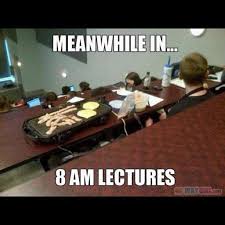
this will NOT be the weirdest thing you see in college, I promise
1. Your parents can only do so much.
Now, I love my parents. I think I have a healthy relationship with them. I've had to strike out on my own very often and while they cannot financially support me, they do so in any other way that they can. However, there is a limit.
College is constantly changing and evolving. Even if you're attending the same place as your parents, there's only so much they can help you with. Computers were coming out during their age. Some of them still used typewriters. Many of them didn't even use the FAFSA (though it's been around since 1965). Things were different back then. Just ask how they applied to college- it was like 2 pieces of paper, compared to the three essays, references, and medical history we need to share (I may be exaggerating).
My point is, times have changed. You can't rely on them forever. The levels of what we need to know is constantly adapting with updates and new curriculum and new demands. Social structures have begun altering and just because something worked at home doesn't mean it will work away. Your parents can help you in many ways, but there are some situations they cannot. It sucks, but it's important to do your best and be prepared for this.
2. Studying is serious.
Understanding is more than memorizing. There are situations where you cannot study overnight. And trust me, it's possible to fail a class, even the "easy" ones. I'm willing to confess, there are various classes- generals and even upper division- that you don't really need to study for. But trust me, there are some. Find your strengths and your weaknesses. And use this: if you're not a natural in this subject, then study. Go to class (even if attendance isn't necessary. But trust me, the professors use more content for quizzes in what they say than what's in the book), and take notes.
Also, talk to your professors. I'm not big on talking to people, but you can learn a lot by talking to them. Introduce yourself, tell them why you are taking the class and what you want to get from it. Tell them your struggle areas and if they have any tips. Professors set up designated open hours for students to come talk to them. If you have any questions, go ask them. Granted, if you do build a relationship with them, then there's no slacking. But if you want to do more than just pass, then build that repetoire. They can become friends and useful network connections.
Prepare ahead of time, especially for large projects. And be there on the first day of class to learn about everything that will happen- you'll be able to gauge better on how heavy the coursework will be and how much you need to study (credit wise they say that's how much you need to study, 1 credit for one hour, 3 credits for 3 hours- and that's after each class, not each week, I believe).
3. Watch Your Money
Keep track of it. Make lists, use Quicken, a phone app, I don't care. Maybe you are working, your parents are paying, or someone's taking care of it. No matter what, it's time you learned how to keep track of your money. I'll make a post later on about savings, checking, credit and credit cards- maybe loans, if you're lucky. But in the mean time, it's time you learned to keep track of where your money goes.
My way is not very thorough, I'll admit: I keep the receipts and count them up later, if I remember. So that's something I'm working on. But when times have been really tight, I work on a budget. I even went a month without buying anything at the grocery store (something I happen to be quite proud about),
Anyways, the best way is to make a budget. How much money you have altogether, and then split it into the venues where you'll need money: social activities, food, school, emergency. Do it by month or by week, however you prefer. But keep track of your money. If things are tight, take out your budget in cash for the month- and when it's gone, you have to wait till next month. It's a handy visual.

4. It can suck.
Watch out for yourself. Sexual assaults went up 52% in 4 year colleges from 2009 to 2012 alone. Every year there are more school shootings. It's a dangerous time out there and just because you may not see it happening, does not mean it's not there.
Make good friends. If you're without a car, keep track of those with vehicles who can help you out. One of my jobs kept me on campus until midnight quite often, and the team was adamant once they realized I was walking two blocks home in the dark. Because even the light doesn't mean you're safe. They would give me rides home, or stick close enough to see that I was fine. Make friends that will watch out for you. Crazy things can happen.
In addition, you're going to be tested in just about every way possible. Not all the professors are great, for starters. Some are jerks and some are hard to work with. Make friends and find out which professors to avoid. And if you can't, try to build a relationships so they know you struggle and ask them to help.
You may have left all of your high school friends and you might realize your friends back home don't care like you thought they did. Distances are trying, no matter the relationship. I've lost many good friends since then. But I've also made better ones since. Either way, let people in and if they have to go, be prepared as well. Personally, I think there's enough good in the world to survive the bad.
Also, you will endure some sleepless nights. You will suffer through midterms and finals. You will be up at 3 AM wondering why you are doing this. Then you will get up at 5 or 6 and wonder again if it's worth it.
5. It really can be the best time.
There are breaks and holidays and three day weekends. Even normal weekends. You can take advantage of them and go hiking. You can take spur-of-moment trips and camp at the Grand Canyon for a few days. You can take a cruise for Spring Break. You can stay up all night making homemade french fries with fry sauce and just talking with your roommates.
You can attend the games and paint your face. You can attend events and sing kareoke and make friends you will see wandering on campus. You can join clubs with people who have the same interests as you. You can learn new skills and build your passion. My best friend decided to take a philosophy course out of curiosity, and now it's everything to her. I have another friend who loves chemistry and gets so excited about everything about it.
You will make new friends in students, workers, and professors. Seriously. Some people are amazing. On that first day, sit down with someone and get to know them. It's so easy to start conversations in college too. Do they live on or near campus? What's the best food in town? What are they studying? Why? Is this a general for them, or for their degree? Or for fun? Why this class? Have they had a class with this professor before, are they any good?
Take a chance. Check out the town, the parks, the people- it can be such a great experience.
6. Figure out your future path
I know, you're not even a third of the way through your life and already they want you knowing what you will do for the rest of it. Trust me, I don't like that. For a while, I wasn't even planning on college. And guess what? Someone people won't go. A lot will drop out. Some will do fine, some will do great, and some will suffer because of that.
But it's your path, and it's up to you. The important thing, for me, is to find what makes you happy and what your passion is. Your first year, take the generals but also take a few fun classes. Philosophy, horse back riding, rock climbing, ancient Greek- try some things out, and start finding your passion if you haven't already. Maybe you have a knack for languages, or for writing or molecular structure- but start finding it. It will lead you on your path and will help make college go a lot faster.
And like I said, college may not be for you. Many people have done well since dropping out. But my advice for that is first to discuss your plan with a few people to get their feedback. They will most likely suggest for you to stay in school, but talk it through with them. Have a structured plan as well as another fall back. There's risk in everything you do, so try to prepare for the worst.
7. You put up with a lot of crap.
Sleepless nights, annoying teachers, general classes, roommates who ignore you or never do the dishes. Bad weather, pointless essays, messes in the library- you'll learn. You'll see what I mean. And that's not even half the crap. There will be annoying and pushy clubs and people, there will be ridiculous activities, a lot of bad food, and some people with too much pep.
It happens.
Like general classes: you have to take particular classes, about 30 credits worth or so, of particular classes that everyone needs to take in order to graduate. You need to have decent math, english and other levels. You have to take PE (but no dodge-ball, thank your lucky stars). There are going to be some really pointless classes. You will want to bang your head against the wall repeatedly rather than deal with them. However, these cannot be avoided. And don't forget to do them, please- several people fail just because they don't like it or they forget about (you will forget about class on occasion. it happens) the entire class and everything- please, don't do that. You have to pass to have the credit and that means taking more credits than necessary to graduate- and if that happens enough, then it'll take another semester or year for you to graduate. Some classes are worthless, but suck it up.
Some people suck, too. Some are too opinionated, some won't shut up in class. Some people think they know everything and they are clearly wrong but you can't convince them. Sometimes, just leave it alone. Also, sometimes you have to pay to print things. And the library closes at inconvenient hours. Crap happens.
Truth be told, this is only the beginning. I'll be adding more to this list eventually because let's face it, there's a lot to know. And it's all within the little things, too.
It might help to go eat some chocolate about now, or take a deep breath. Things can get overwhelming pretty fast sometimes.
Let me know what else you think a college student should know ahead of time! Or do you have any stories to back me up? Or perhaps do you think I'm wrong? I'm eager for feedback!

No comments:
Post a Comment